Access and safe working space
Height, pitch, landscaping and the location of the repair affect how the work is reached and protected.
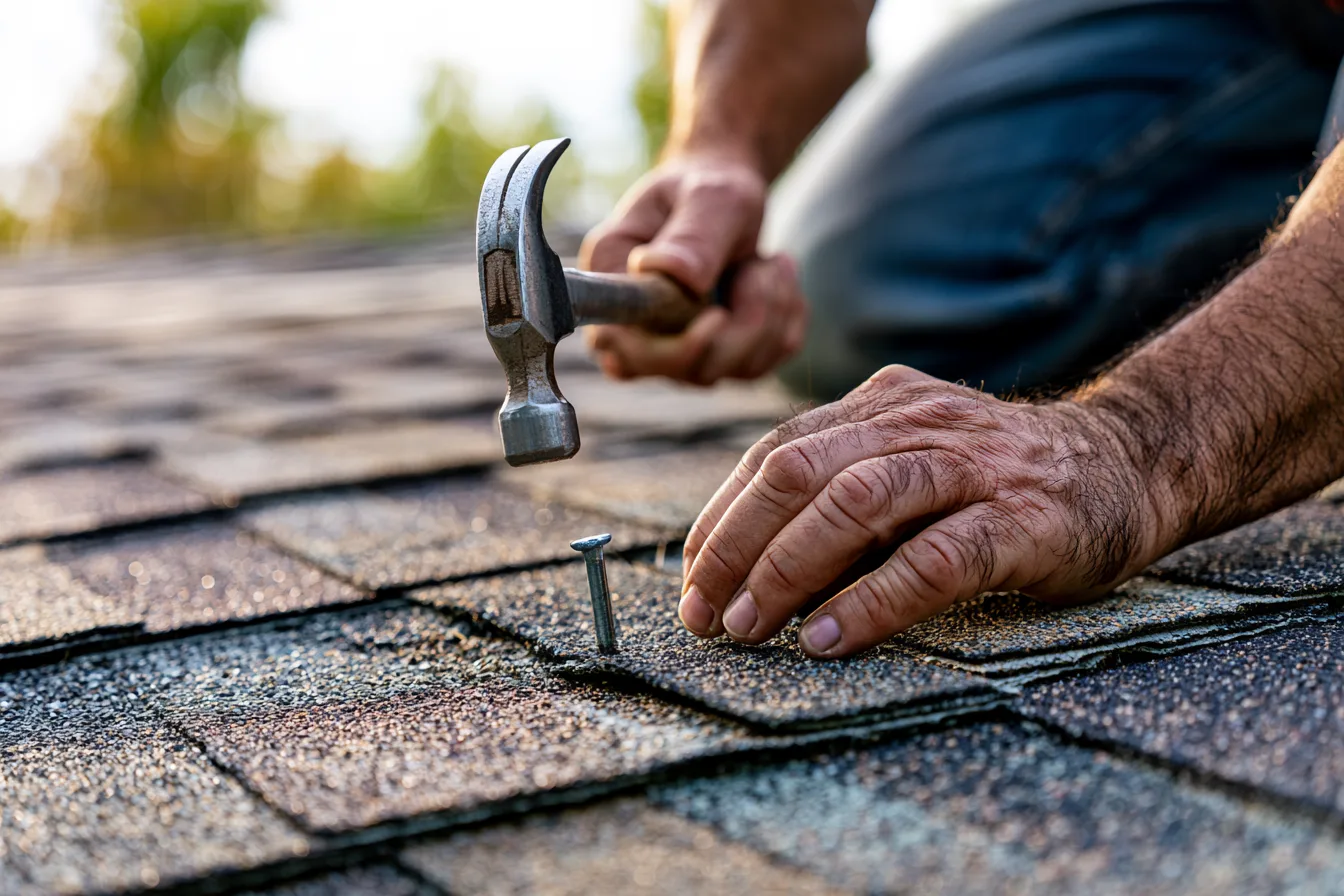
A lasting roof repair starts with the place water gets in and the condition of the roofing around it. Request a free inspection in Heath.
Water can travel along decking or framing before it reaches the ceiling. The patch directly above a stain can miss the opening farther up the roof, which is why the same leak sometimes returns after another coat of sealant.
Roof repair in Heath starts by tracing that path. A roofer checks the shingles, flashing and penetrations in the affected area, then looks at whether the surrounding materials can be lifted and joined into the repair. The aim is to stop the entry point and restore the roof’s overlapping layers.
A free roof-walk inspection is the next step when the cause is unclear. Tell us the room and what you have seen. You do not need to locate the opening yourself.

Small visible defects can leave an opening through an otherwise serviceable roof.
If water is near electrical fixtures or a ceiling is sagging, keep people away from the area and seek appropriate urgent help. Do not climb onto a wet roof.
Flashing is the metal that directs water away from a roof joint. At a sidewall, individual pieces overlap with the shingle courses. At a chimney, base flashing and counterflashing work together so water coming down the masonry lands over the roof covering.
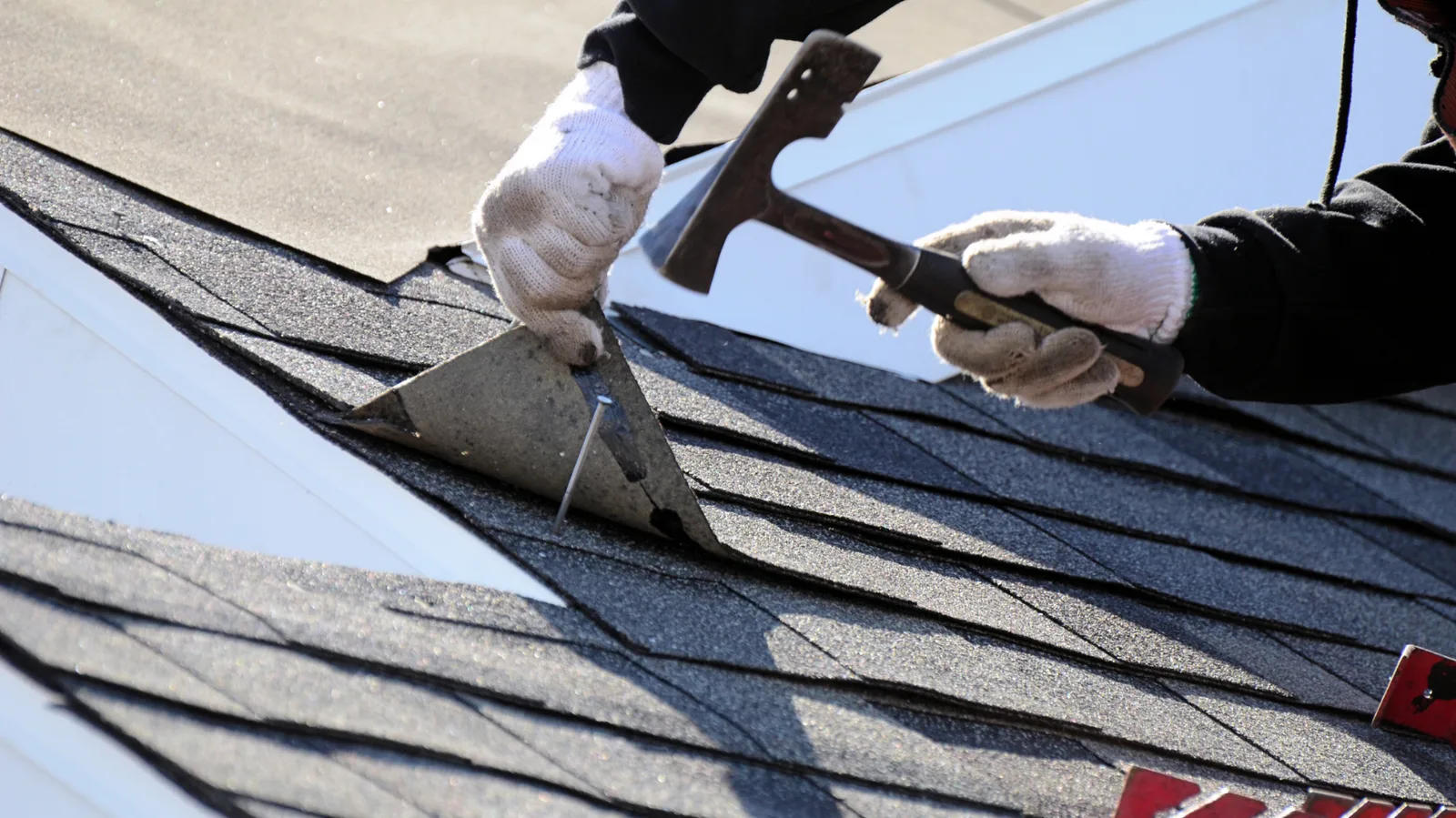
Repair can require lifting or removing surrounding shingles and opening the edge of the wall finish so the new flashing sits in the right sequence. Smearing sealant across the visible joint leaves that sequence unchanged. Sealants have useful roles, but they do not substitute for rebuilding a failed overlap.
The Roof Detail Explorer explains valleys, walls, pipes and lower roof transitions in more detail.
The answer should follow the condition found on the roof, not a fixed rule based only on age.
A pipe boot replacement and a chimney flashing rebuild are different jobs even when each starts with a small ceiling stain. A meaningful repair price follows the entry point, access and layers that must be opened.
Hidden wood damage adds removal and replacement beyond the surface repair. A steep slope, two-story access or a difficult wall connection adds labor and protection.
Height, pitch, landscaping and the location of the repair affect how the work is reached and protected.
More surrounding roofing has to come off when a flashing repair runs beneath several courses or behind wall cladding.
Soft decking or wet materials have to be addressed before the finished roof covering goes back on.
A compatible replacement is the first requirement. Age, weathering and discontinued colors can leave a visible difference even when the original product name is known. A larger slope repair sometimes resolves both the tie-in and appearance question.
Yes. Flashing, a vent penetration, a skylight or an adjacent wall can admit water. The inspection needs to follow the entry point rather than assume the roof covering is the only possible cause.
The roof still needs an assessment of its condition and repair scope. Our storm damage page explains the separate questions of physical damage and insurance coverage.
Share the property location and the room or roof area that concerns you. Start with a free roof inspection.