Explore the details that keep a roof dry
See why a small roof opening can call for more than a surface patch. Explore the details, then have the actual roof inspected.
The roof has to shed water through every change
A roof sheds water through overlapping layers. At a wall, valley, pipe or change in slope, the water path changes. The repair needs to recreate that path and connect to sound material around it.
Choose a detail below to see its role, the problem a roofer checks and what a proper repair has to resolve. These are simplified explanations, not installation instructions or a diagnosis of your roof.
Choose the detail you want to understand
Open a detail. Each view explains the water path, repair work and the condition that can widen the job.
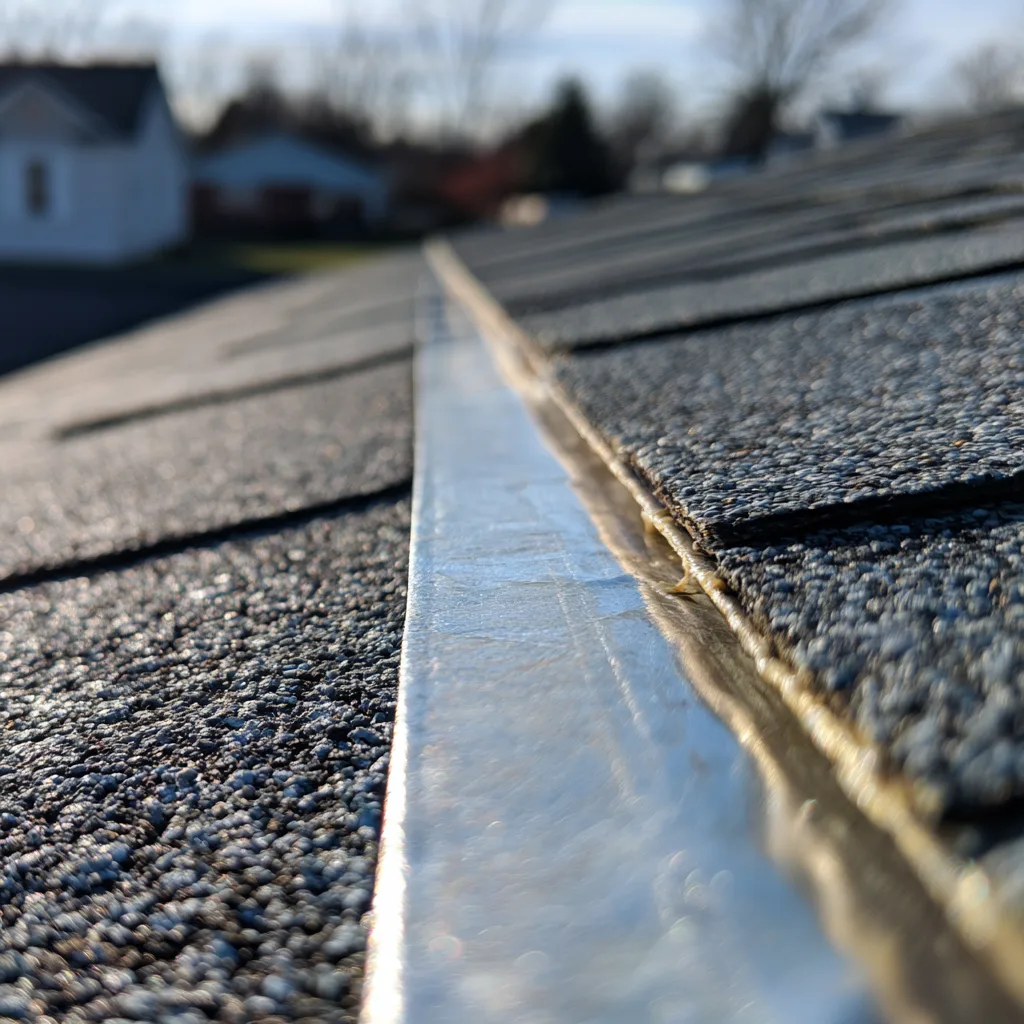
Valley: where two slopes collect water

The water path
Water from two roof planes converges in the valley and runs toward the eave. The covering and underlayment must direct that combined flow over the next layer.
What can go wrong
Debris, damaged shingles or a failed valley detail can send water beneath the covering. A surface patch at the bottom can miss the opening farther up the channel.
What the repair does
The roofer opens enough surrounding material to restore the valley assembly and connect the new work to sound roofing. The selected shingle system determines the permitted valley construction.
Where the scope changes
If shingles break when lifted or the decking is damaged, the repair boundary has to move beyond the visible leak.
Wall or chimney: water must land over the roof
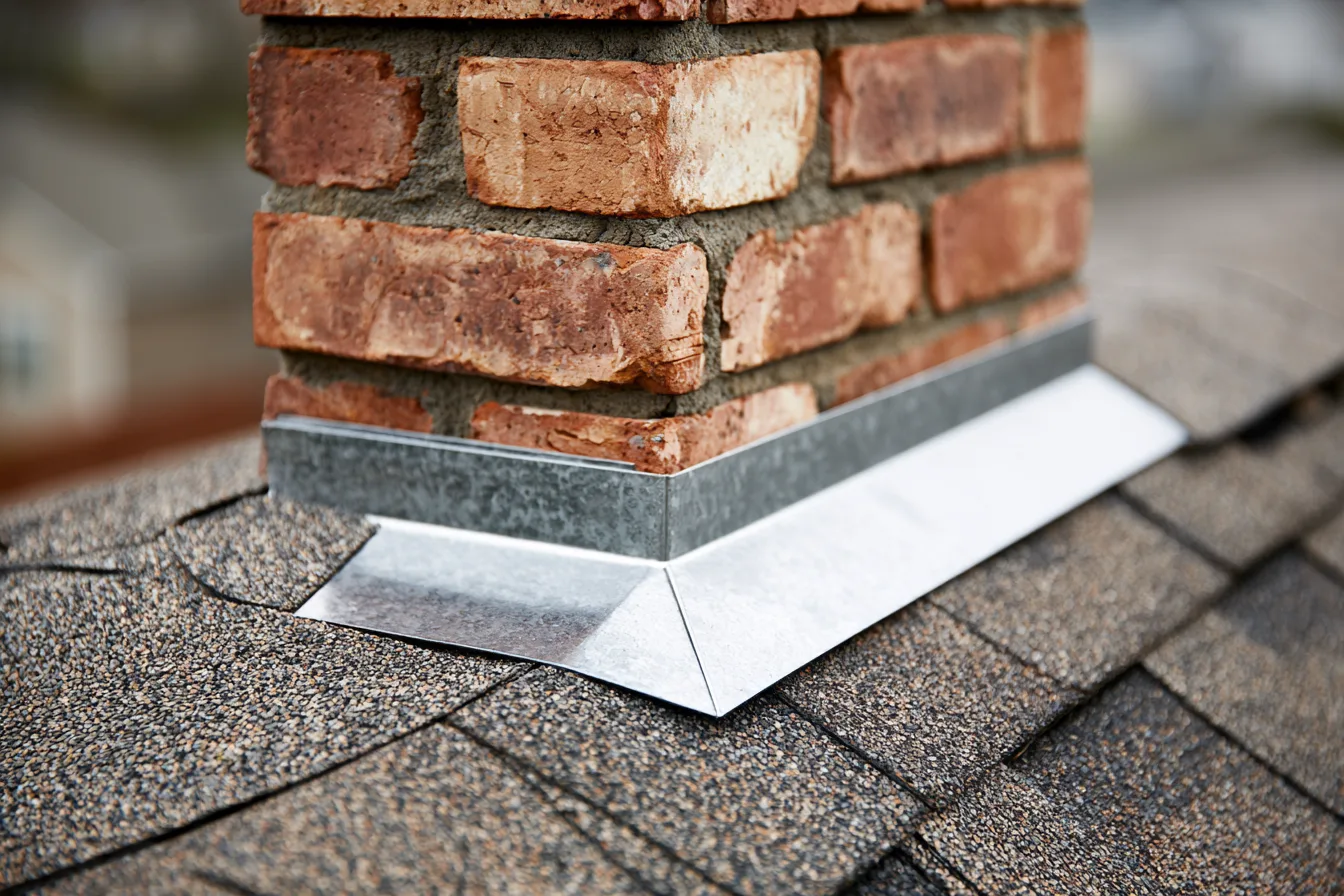
The water path
Water coming down a wall must land on flashing that overlaps the roof covering. A sidewall uses a different detail from the front of a chimney.
What can go wrong
Separated counterflashing or a failed overlap can admit water behind the metal. Exposed sealant can conceal that failure without restoring the sequence.
What the repair does
Repair may require lifting shingles and working behind the wall finish so the new flashing joins the water-shedding layers. The joint is rebuilt in the order water meets it.
Where the scope changes
Damaged masonry, siding or concealed wood can extend the work beyond roofing. Those boundaries belong in the project scope.
Pipe penetration: close the opening without blocking runoff
The water path
A pipe passes through the roof. Its boot and flashing seal around the pipe while the base integrates with the shingle courses.
What can go wrong
A split collar or failed base detail gives water a route along the pipe. The surrounding shingles can still be in good condition.
What the repair does
A suitable repair restores both the seal around the pipe and the flashing connection beneath the shingles. Compatible materials and the existing roof condition determine the approach.
Where the scope changes
A new collar alone will not resolve damaged flashing, a loose penetration or deteriorated surrounding roofing.
Lower roof: a change in pitch changes the assembly
The water path
A porch or addition can receive runoff from a steeper main roof. Water leaves the lower plane more slowly, making the covering and connection especially important.
What can go wrong
Using a roof covering outside its slope requirements or creating a poorly drained junction can produce recurring leaks even when the visible material is new.
What the repair does
The roofer checks the actual pitch, the water arriving from above and the material requirements. A low-slope membrane may need to connect beneath the steep-slope covering.
Where the scope changes
A surface seal cannot correct every slope or drainage problem. Some transitions need a redesigned assembly rather than another patch.
A repair has to connect to the layers around it
The visible defect sets the investigation in motion. The sound material around it sets the repair boundary. That difference explains why a small stain can require opening more than a small square of roof.
It also explains why a detail can be repaired without replacing the whole roof. Where the surrounding covering remains workable, the new material can tie into it. Where it fractures or is widely damaged, the scope changes.

Use the explanation to understand the work
You can describe a recurring leak without identifying which detail has failed. Share the room or roof area that concerns you and let the inspection establish the cause. Do not climb onto the roof to match it to a diagram.
Manufacturer instructions govern the selected product’s details. GAF’s proper flashing technical guidance provides additional technical context; it is not evidence of a Bluffview manufacturer affiliation.

Have a roofer look at the real detail
Request a free inspection in Heath and connect the explanation to the roof you have.